
Real-life guide
Menopause rosacea or hot flushes? Why your face turns red and what helps
At a glance
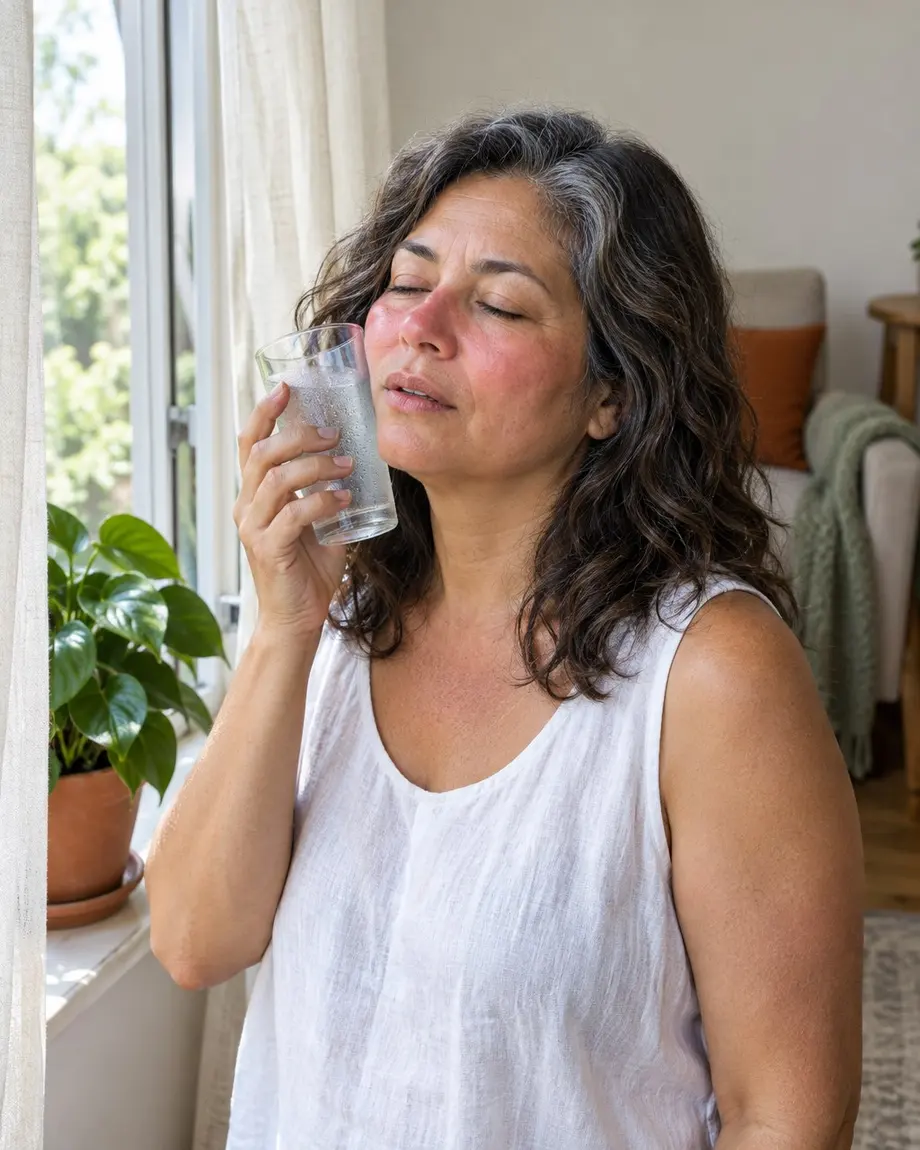
If your face turns red and hot, you may be wondering whether it is a hot flush or rosacea. The quickest clue is timing. A hot flush comes on suddenly, lasts several minutes and passes. Rosacea redness tends to come back in the same places, often with bumps, small visible blood vessels or stinging. You can have both, and menopause flushing can make rosacea worse.
This page helps you tell them apart, adjust your skincare, and decide when to get treatment. For red patches and burning more broadly, see menopause skin rash, red patches or burning.
Key points
- The NHS describes hot flushes as the face, neck and chest suddenly feeling very hot, sometimes with sweating, lasting for several minutes (NHS).
- The NHS says rosacea redness comes and goes, and that tiny broken blood vessels can appear that do not go away (NHS).
- Flushing is seen in around 75% of perimenopausal and menopausal women, and menopausal flushing is known to worsen or even bring on rosacea (review).
- Gentle skincare and daily sunscreen help. Rosacea treatments are prescription, so see a GP or dermatologist if redness keeps returning.
- A painful, gritty or blurred eye needs urgent attention (see below).
Is it hot flushes or rosacea?
Look at how long it lasts and what else comes with it.
A hot flush. The NHS says the face, neck and chest suddenly feel very hot. It can make you sweat, cause palpitations or anxiety, or make you dizzy. It can happen by day or at night, and lasts for several minutes. Then it passes.
Rosacea. The NHS describes redness across the nose, cheeks, forehead, chin, neck and chest that comes and goes. You may also see:
- small pink or red bumps on the face
- tiny broken blood vessels that do not go away
- a burning or stinging feeling when using water or skincare products
DermNet NZ draws the same line in medical terms. Flushing is transient, recurrent redness, while rosacea involves persistent facial redness.
If your face goes red in a short wave with heat and sweat, that points to a flush. If it stays pink or red between waves, or you have bumps, vessels or stinging, that points to rosacea. Many women have a mix. Because the two can look alike, a clinician is the right person to tell you which one you have.
Can menopause trigger or worsen rosacea?
Yes, it can. A dermatology review of menopause and skin says menopausal flushing is known to exacerbate or even precipitate rosacea. The same review notes there is very little research on the link, so the exact reason is not settled.
The National Rosacea Society describes perimenopause as a time of both increased incidence of rosacea and worsening of existing symptoms. It says the heat and flushing from hot flashes may aggravate rosacea, and that hormone fluctuation can make blood vessels more reactive, drawing heat to the face.
It also says the core treatment of rosacea does not change during perimenopause. Gentle skincare, regular moisturizing and daily sun protection stay especially important.
What triggers a red face?
Triggers differ from person to person. The NHS lists common rosacea triggers as alcohol, spicy foods, hot drinks, sunlight, temperature extremes, aerobic exercise and stress.
The American Academy of Dermatology adds some detail:
- Sun. A few minutes of sunlight on rosacea-prone skin can lead to flushing and redness.
- Heat. Plan ahead to avoid overheating, for example with warm rather than hot showers, layered clothing, and cool drinks or a fan.
- Alcohol. Red wine may be the biggest culprit. Switching drinks, diluting them or skipping alcohol may reduce flares.
- Spicy food. If you still flare, it is best to avoid all spicy foods.
- Skincare. Burning, stinging or dryness after using a product is a sign it is irritating your skin. Check labels for menthol, camphor or sodium lauryl sulfate.
A short diary of when your face flares can show your own pattern. The NHS says that if you know a trigger like alcohol or spicy food makes symptoms worse, try to avoid it as much as possible.
What is a gentle routine for a reddened face?
Keep it short. The AAD skincare tips for rosacea are a good base:
- Cleanse very gently, twice a day. Choose a mild cleanser and avoid soap. Our gentle cleansers for menopausal skin cover the options.
- Moisturize after cleansing. The AAD says moisturizer is essential whether rosacea makes your skin dry or oily. See our fragrance-free moisturizers for dry menopausal skin.
- Wear sunscreen every day. The AAD recommends broad-spectrum protection, SPF 30 or higher. If sunscreen irritates you, it suggests a mineral, silicone-containing, fragrance-free formula. The National Rosacea Society says the best sunscreen is the one you will put on every day. Start with our sunscreens for dry menopausal skin.
- Choose fragrance-free. The AAD prefers fragrance-free over unscented. Our guide to fragrance-free and unscented products explains the difference.
- Test new products first. The AAD says to test skin care products and makeup before applying them to your face.
- Skip scrubs and toners. The AAD says to avoid rubbing, scrubbing or massaging skin with rosacea, to stop exfoliating, and never to use an astringent or toner. It lists ingredients to avoid, including alcohol, camphor, fragrance, glycolic acid, lactic acid, menthol and sodium lauryl sulfate.
If your skin has become reactive overall, read menopausal skin that has suddenly become sensitive. If you use retinol and your face is red and stinging, see retinol irritation on menopausal skin.
Skincare can calm irritation. It does not treat rosacea itself.
What helps hot flushes themselves?
For flushes, the NHS suggests wearing lightweight clothing, keeping your bedroom cool at night, and taking a cool shower, using a fan or having a cold drink. It also suggests reducing stress, cutting back on triggers such as spicy food and caffeine, staying active and keeping to a healthy weight. It notes that cognitive behavioural therapy (CBT) can help manage hot flushes.
If flushes disturb your day or sleep, medical options exist. The NHS says oestrogen is the main type of HRT, and that non-hormonal options include CBT, clonidine or an antidepressant. A doctor, nurse or pharmacist can talk through what suits you. The dermatology review above says flushing generally responds to estrogen therapy, but it does not show that HRT treats rosacea. Hormone therapy is a decision to make with a clinician, based on your own risks and benefits.
What about the eyes (ocular rosacea)?
Rosacea can affect the eyes. DermNet NZ says eye features affect over 50% of people with rosacea. The NHS lists sore eyelids and crusts around the roots of the eyelashes among possible signs.
Get urgent help if your eye is painful, feels gritty, or your vision is blurred. The NHS says these could be signs of keratitis, which can be serious if not treated urgently. In the UK, ask for an urgent GP appointment or call 111. In the US, contact your doctor or an eye specialist the same day, and go to an emergency department if you cannot reach one.
Does redness look different on brown or black skin?
It can. The NHS says the redness may be harder to see on brown or black skin. DermNet NZ says rosacea may be more difficult to recognize and under-recognized in skin of colour.
So do not rely on colour alone. Notice warmth, burning or stinging, tightness, bumps and a face that reacts to heat, sun or skincare. The NHS also says women from a Black ethnic background are more likely to have hot flushes that are severe and continue longer (NHS). If you suspect rosacea, ask for an exam rather than waiting for visible redness.
When should I see a doctor?
See a GP or dermatologist if:
- you think you have rosacea. The NHS lists having symptoms of rosacea as a reason to see a GP (NHS);
- redness keeps coming back in the same places or stays between flushes;
- you have bumps, visible vessels or stinging that gentle care does not settle;
- flushes are frequent enough to disrupt your sleep or daily life.
The NHS says rosacea cannot be cured, but treatment from a GP can help control the symptoms. Treatment includes prescription creams and gels, and sometimes antibiotics taken for 6 to 16 weeks. These need a prescription, so skincare from the shelf will not replace them.
Seek urgent care for any eye pain, grittiness or blurred vision, as above.
Questions you may still have
Is a red face at night a night sweat? It can be. The NHS says hot flushes can happen during the day or at night, and the night version is called night sweats. If your face is also red and sore in the morning, mention it to a clinician.
Will my face stop flushing after menopause? The NHS describes flushes as lasting several minutes each time, but how long the years of flushing last varies, and women from a Black ethnic background are more likely to have flushes that continue longer. Rosacea is separate. The NHS says it cannot be cured but can be controlled with treatment.
Should I use more products to calm the redness? Fewer is better. The AAD says burning, stinging or dryness after a product means it is irritating your skin. Keep to a gentle cleanser, moisturizer and sunscreen, and ask a clinician before adding anything else.
Can I wear makeup over a red face? Test any new makeup first, as the AAD advises, and check labels for fragrance and the irritants listed above. Remove it gently at night.
This is general information, not medical advice or a diagnosis.