Honest comparison
La Roche-Posay Lipikar vs Cicaplast Baume B5: Which to Buy
At a glance
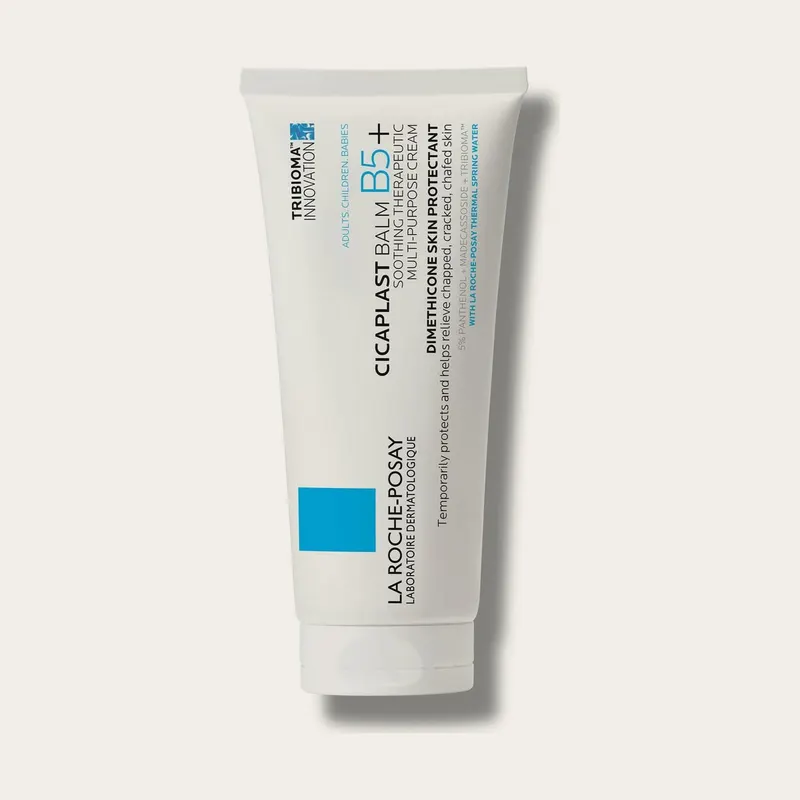
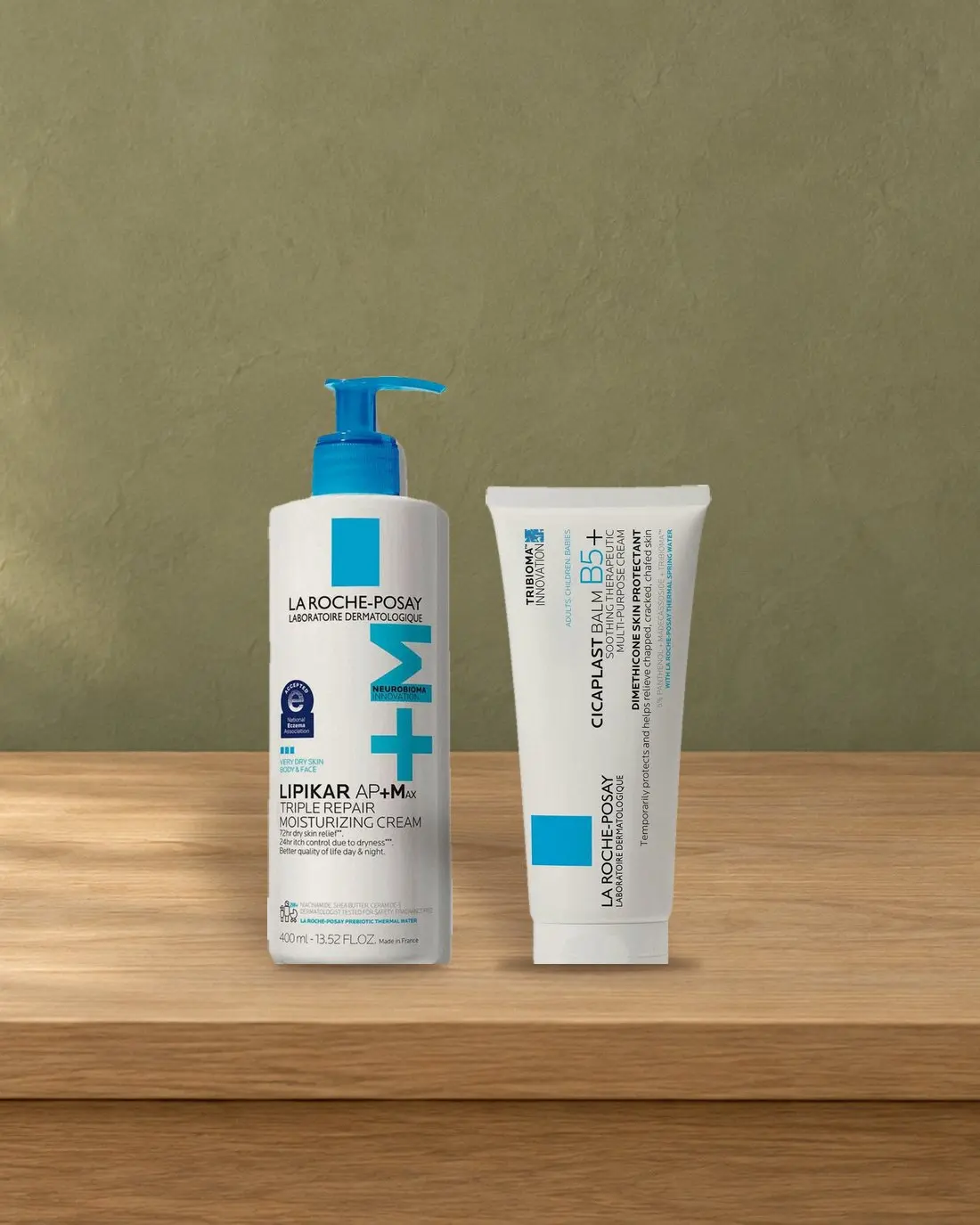
Use Lipikar AP+MAX as the daily face-and-body cream for larger areas of very dry skin. Cicaplast Balm B5+ is for smaller areas of dry, chapped or mildly chafed skin; its US label says to apply to clean, dry skin and avoid the eye area.
This comparison covers the current US products. Names and formulas can vary by market, so check the product and directions on your local package.
Our favorite picks at a glance
La Roche-Posay Lipikar AP+MAX Triple Repair Moisturizing Cream
Best if: Dry skin over larger areas
Skip if: Not a universal itch solution
La Roche-Posay Cicaplast Balm B5+
Best if: Small dry, chapped or chafed patches
Skip if: Can duplicate a moisturizer you already like
What is the difference between Lipikar and Cicaplast?
| Decision | Lipikar AP+MAX Triple Repair Cream | Cicaplast Balm B5+ |
|---|---|---|
| Texture | Cream (sold as a moisturizing cream) | Balm (sold as a skin protectant) |
| First reason to consider | Daily moisture for larger areas of very dry face/body skin | A smaller area of dry, chapped or mildly chafed skin |
| Best for | Dry shins, forearms or cheeks | Small chapped spots or mild chafing |
| Use on face? | Yes, the label has face and body directions | Yes, on a small patch; avoid the eye area |
| Fragrance | Fragrance-free in the checked US listing | Fragrance-free in the checked US listing |
| Niacinamide | Present | Absent in checked US list |
| Formula distinction | Shea butter, glycerin, niacinamide, ceramide NP | 1% dimethicone skin protectant; panthenol and shea butter |
| Checked application | Morning and night on clean, dry skin | Clean, dry skin; avoid eye area |
| Skip if | You avoid any ingredient on its list, including niacinamide | Your moisturizer already suits that spot, or the area is deeply cracked or bleeding |
Lipikar: useful as a regular moisturizing choice
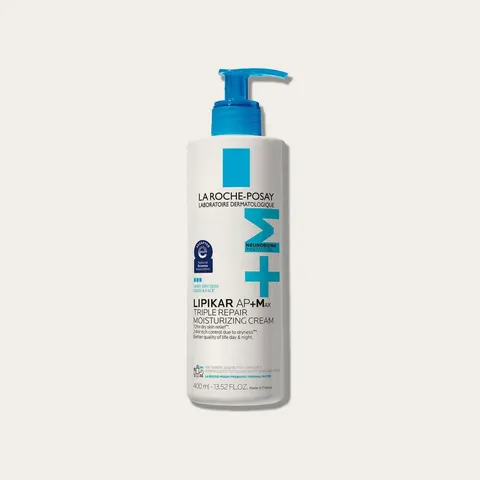
The current US Lipikar AP+MAX page lists face/body use, twice-daily directions, niacinamide and ceramide NP. The linked 13.5 fl oz (400 ml) size comes in a pump. Skip it if you avoid an ingredient on its list or dislike cream textures.
Cicaplast: a different formulation and label
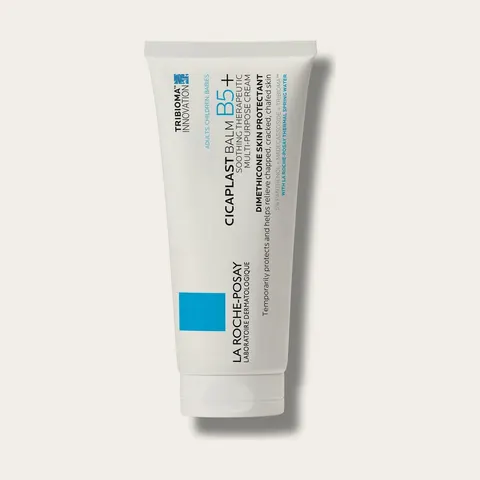
The current US Cicaplast Balm B5+ page lists dimethicone 1% as its active skin-protectant ingredient and highlights panthenol. Directions say to apply to clean, dry skin and avoid the eye area. The linked size is a 1.35 fl oz (40 ml) tube, which may be impractical for large areas such as both legs.
For mild chafing or superficial dry cracks, Cicaplast may fit its stated use for dry, chapped or chafed skin. Do not use a cosmetic balm as a substitute for care of deep or bleeding cracks. For persistent redness, pain, worsening itch or a rash, seek clinical advice rather than repeatedly adding products.
Questions before buying
Can Cicaplast be used every day?
The checked US page gives directions rather than a daily limit: apply to clean, dry skin and avoid the eye area. The manufacturer’s FAQ also allows all-over moisturizing use, so daily use as a moisturizer is within its stated uses. Follow the directions on your own tube, and ask a clinician if the skin stings, reddens or gets worse.
What is Lipikar AP+M used for?
The current US page names AP+MAX for face-and-body moisturizing and notes that it was formerly Lipikar AP+M Balm. Product names and formulas may differ in other markets; follow the package you have.
Can Cicaplast replace my regular facial moisturizer?
The manufacturer’s FAQ allows all-over moisturizing use, but replacing your moisturizer is optional. Keep the one that already works.
Can I put Cicaplast around my eyes?
The checked US directions say to avoid the eye area. Follow that instruction.
For a broader shortlist, read face moisturizers for menopausal dryness, Vanicream vs La Roche-Posay and what to change when skin becomes sensitive. US product and direction sources checked November 20, 2026. Check the formula and directions on the package you receive.
Products mentioned in this guide
Shopping outside the US? The store may take you to a local site in supported countries. Our product research covers the US formulas. Products, sizes, ingredients and availability can differ by country. Check the local listing before buying.
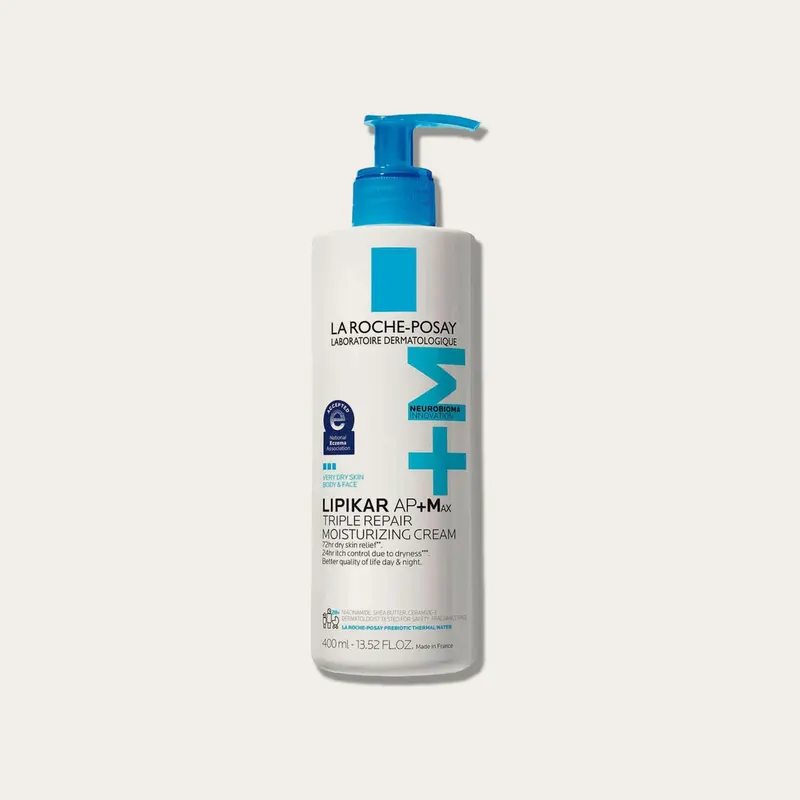
La Roche-Posay Lipikar AP+MAX Triple Repair Moisturizing Cream
Check current price on Amazon