
Researched selection
Crepey and saggy neck in menopausal skin: what neck creams can and cannot do
At a glance
A neck cream can make crepey, dry neck skin feel and look smoother. It cannot tighten loose or sagging skin, and no product will reverse sun damage. Daily sun protection and a moisturizer are the foundation. A retinoid or an exfoliating acid may add some improvement in texture over weeks, with irritation and sun-sensitivity risks. Loose skin is a different problem, and a dermatologist can explain in-office options.
This is a researched guide, not a medical assessment. We have not used the products named here. Reddit threads show this is a very common unanswered question, but forum posts are audience evidence, not proof that anything works.
A source-based answer on crepey and sagging neck skin around menopause: what topical creams, SPF and acids can change, what they cannot, procedure options in brief, and two researched neck products.
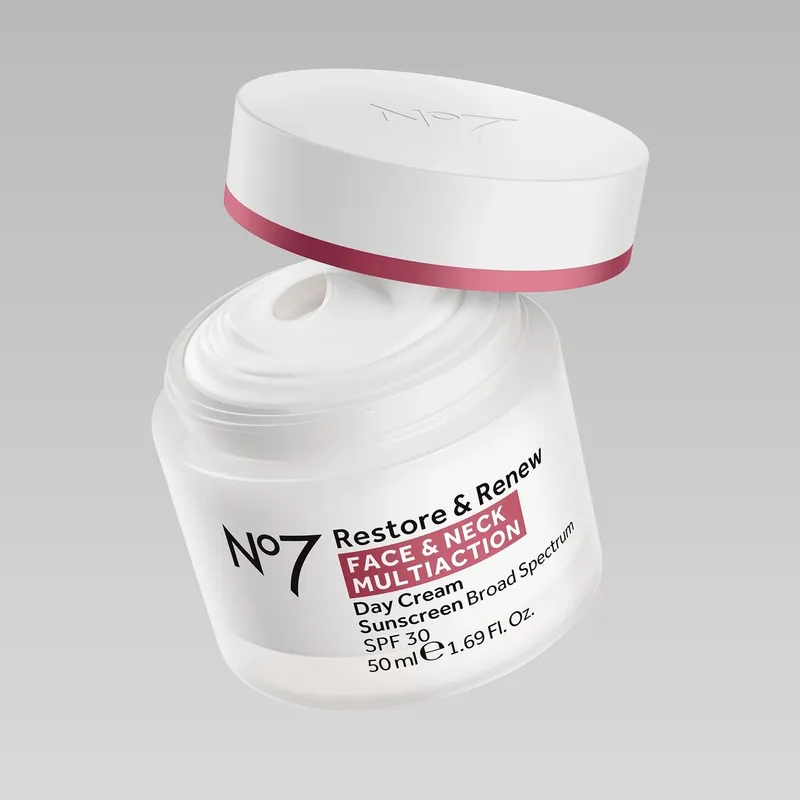
Product photographs courtesy of No7. Packaging may vary.
On this page
What a cream can and cannot change
| What you notice | What a topical can realistically do | What it cannot do |
|---|---|---|
| Dry, rough or flaky neck skin | Hydrate and soften with moisturizer; gentle acids may help surface texture | Fix underlying sun damage |
| Fine crepey lines | May soften the look over weeks with sunscreen, moisturizer and possibly a retinoid | Remove deep lines |
| Loose, sagging skin | Nothing reliable | Tighten or lift |
| Looser skin after weight change | Nothing reliable | Replace excess skin |
Why the neck changes
The Cleveland Clinic describes crepey skin as typically traced to sun damage, which breaks down elastin, with age making skin thinner and looser, usually from the 40s. Weight change, dryness and some medications can add to it. It says moisturizers and creams “work well for mildly crepey skin, but they have limitations.” Hormone changes around menopause can affect skin; whether hormone treatment is right for you is a clinician conversation, and we make no skin claim about it.
What actually helps, in order
- Sun protection every day. The Cleveland Clinic calls it the most important step and recommends broad-spectrum SPF 30 or higher. Follow the AAD’s guidance on choosing and applying sunscreen, and do not stop at the jawline. See our sunscreens for dry skin.
- A moisturizer you will actually use. Ceramides, glycerin and hyaluronic acid are conventional options. Moisturizer helps hydration and comfort, not laxity.
- A retinoid, introduced slowly. The Cleveland Clinic lists retinol creams to reduce the crepey look; the AAD’s retinoid guidance explains irritation limits. Neck skin is thin, so go slowly; see retinol irritation in menopausal skin.
- Exfoliating acid creams, with care. Lactic acid and similar alpha hydroxy acids are a common category for rough or crepey texture. The FDA says AHA products can increase sun sensitivity and recommends sun protection. Readers on forums often name lactic-acid body lotions; we have not reviewed those products, and a stronger acid on thin neck skin can sting.
- Peptides, as an optional extra. Evidence is limited; see do peptides work on mature skin.
What about procedures?
For loose skin, dermatologists and plastic surgeons offer in-office options. The Cleveland Clinic names fillers, fractionated lasers, ultrasound and radiofrequency devices, and surgery for significant excess skin, with costs, variable results and scarring as trade-offs. This is not a recommendation; a qualified clinician can tell you what suits your skin and whether anything is worth considering. If an at-home routine has not helped after a couple of months, or you are bothered by loose skin, that is a good point to ask.
Common questions
What age should you start using neck cream?
There is no required age. The Cleveland Clinic notes crepey changes usually begin in the 40s, and sun protection helps at any age. A neck cream is optional; a daily SPF is not.
Serum or cream for the neck?
A serum adds a thin layer of ingredients; a cream carries the moisture. If you use both, the cream goes on last. If you only want one, choose a cream for the neck.
What actually tightens neck skin?
No cream reliably does. In-office procedures are the options that clinicians discuss for laxity, and results vary.
What is the best cream for neck lines?
The best routine is a daily SPF, a moisturizer and, if tolerated, a retinoid. Below are two researched products, not tested ones.
Two researched products for the neck
Eight Saints Firm Intentions Neck Cream: a moisturizer for neck hydration
Official ingredients include peptides, niacinamide, hyaluronic acid, plant oils and lactic acid, with no sunscreen. Read our full review. Its official page makes tightening and repair claims that go beyond the evidence.
No7 Restore & Renew Face & Neck Day Cream SPF 30: daytime SPF in one step
Contains avobenzone, octisalate and octocrylene for SPF 30, with peptides and ceramides, plus fragrance and alcohol. Read our full review. The No7 US page we checked directs use on face and neck; its official product page has the list.
Quick comparison: two neck products
This comparison is researched from official pages, not tested. Prices and ratings change; check dates are shown.
Eight Saints Firm Intentions Neck Cream
About $34 on Amazon, checked October 10, 2026 (2 oz).
- Key ingredients
- Glycerin, plant oils, niacinamide, hyaluronic acid, peptides, lactic acid.
- Best for
- Neck hydration and comfort, under a separate SPF.
- Watch out for
- No SPF; tightening claims are not supported.
No7 Restore & Renew Face & Neck Day Cream SPF 30
About $24.97 on Amazon, checked October 10, 2026 (50 ml).
- Key ingredients
- SPF 30 chemical filters; glycerin, peptides, ceramides; fragrance, alcohol.
- Best for
- One daytime step with SPF for face and neck.
- Watch out for
- Fragrance and parabens; reapplication directions are on the package.
Using both is reasonable: the SPF cream by day, the neck cream at night. Neither tightens loose skin.
Your next step
Start with a daily SPF and a moisturizer you like, and give them a couple of months. Add a retinoid only if your skin tolerates it. For loose skin, speak with a dermatologist. Persistent rash, itch or a mark that changes on the neck needs a qualified clinician.
Sources and products checked October 10, 2026.
Compare before you buy
Shop the products discussed
Choose a product for the job it fills. Check the selected size, current package ingredients and seller before ordering.
Shopping outside the US? Amazon may take you to a local store in supported countries. Our product research covers the US formulas. Products, sizes, ingredients and availability can differ by country. Check the local listing before buying.
Products discussed in this article. Amazon product photography. Each link names its selected size; check current packaging and seller before ordering.
Eight Saints Firm Intentions Neck Cream
Linked size: Confirm the selected size on the Amazon page; official full size is 2 oz
View on AmazonPhoto: No7 · Pictured: 50 ml
No7 Restore & Renew Multi Action Face & Neck Day Cream SPF 30
Linked size: Confirm the selected size on the Amazon page; listed size is 50 ml / 1.69 fl oz
View on AmazonAmazon buttons and photos linked to Amazon are affiliate links. Retailer stock, prices, sellers and packaging can change. Each button names the linked size.