
Researched selection
Best urea lotion for dry, rough legs and arms over 50
Quick picks
 Check price
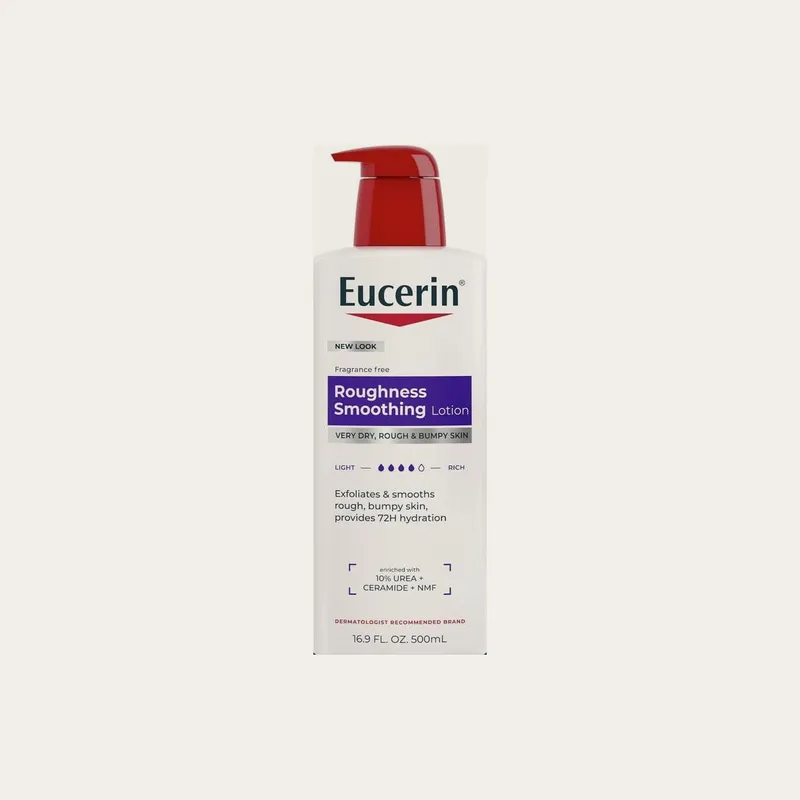
Eucerin Roughness Relief Lotion (now labelled Roughness Smoothing, same formula)
Best for: Rough legs, fragrance-sensitive skin
Downside: Sunburn Alert
 Check price
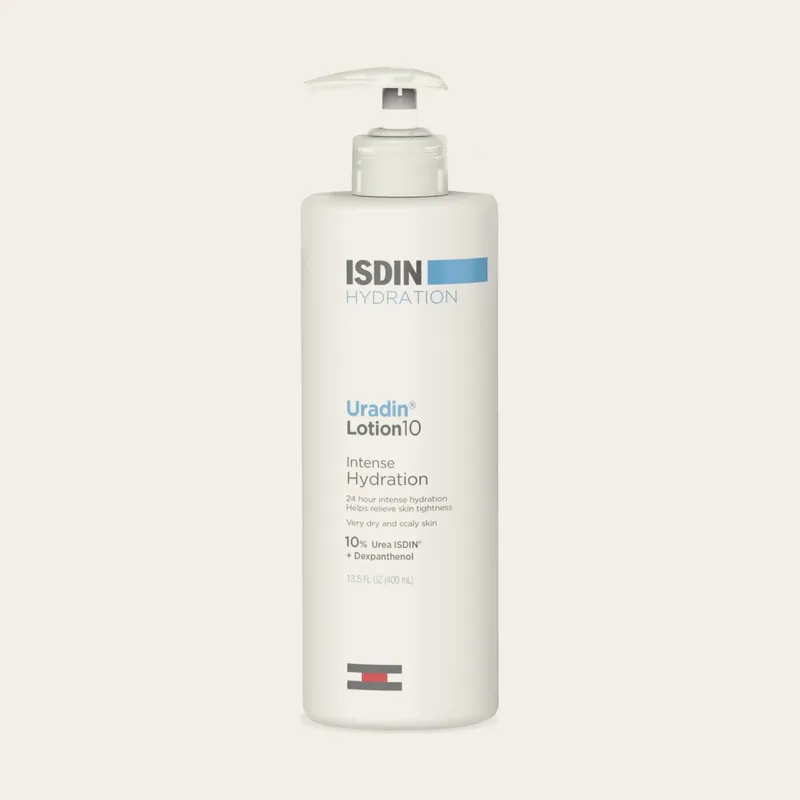
ISDIN Uradin Lotion 10
Best for: Dry skin, if fragrance is fine for you
Downside: Contains fragrance
 Check price
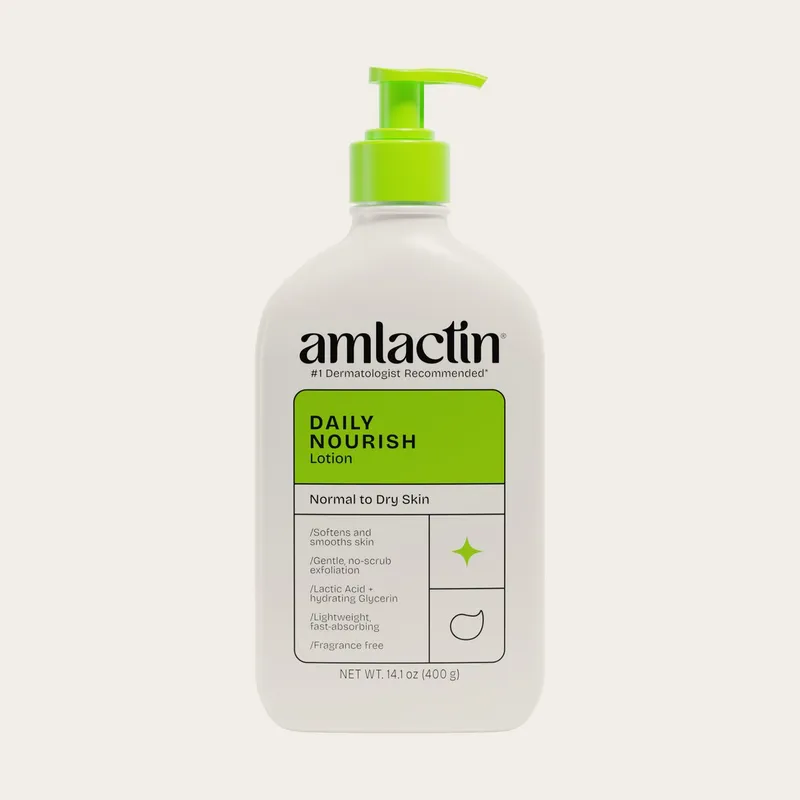
AmLactin Daily Nourish Lotion, 12% Lactic Acid
Best for: Rough or bumpy skin, if you prefer an acid
Downside: Sunburn Alert; may sting sensitive skin
At a glance
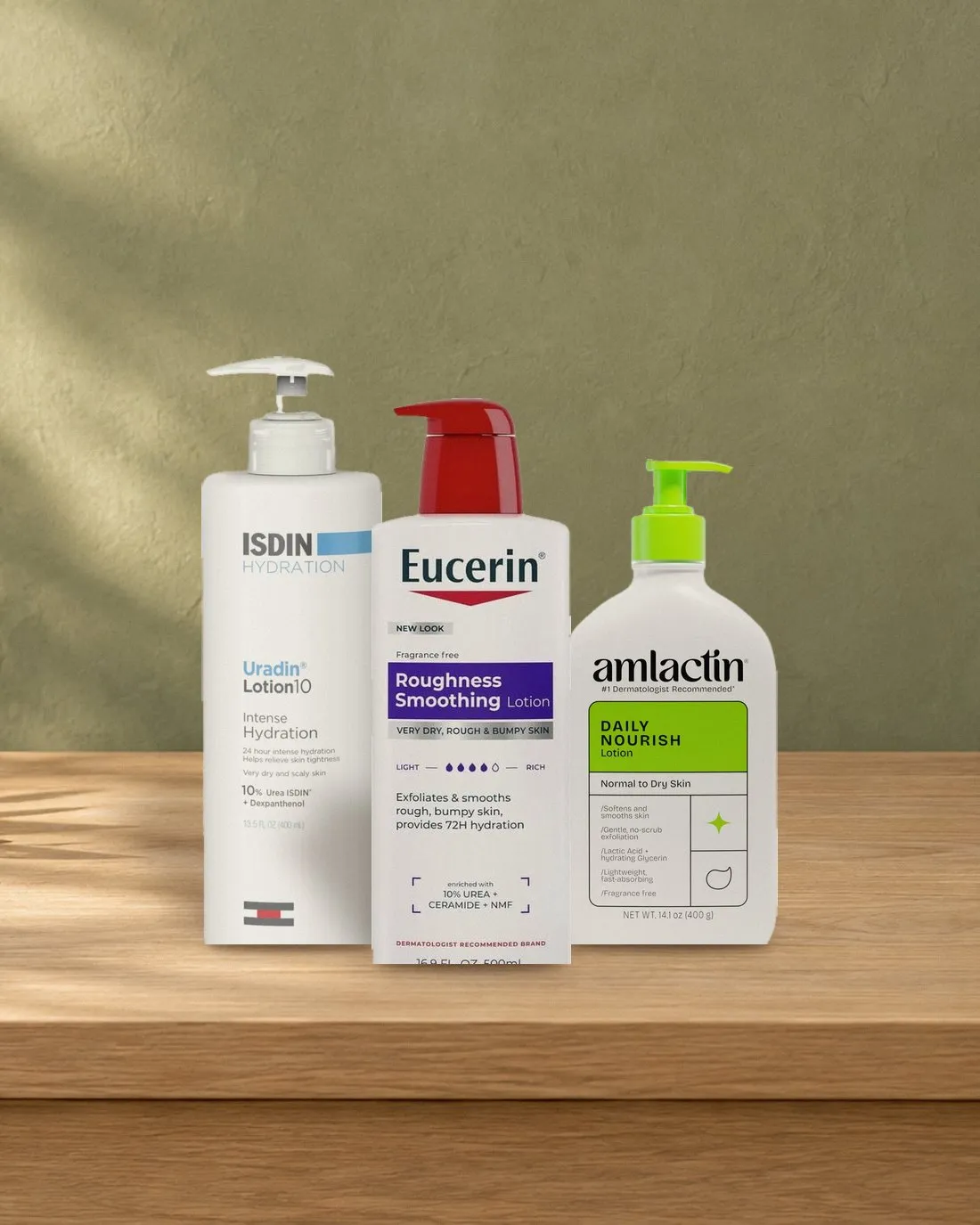
For dry, rough legs and arms after 50, Eucerin Roughness Relief Lotion is our first pick if you react to fragrance. It states 10% urea, and the brand says it is free of fragrance, parabens and dye. ISDIN Uradin Lotion 10 also states 10% urea, but its ingredient list includes fragrance and nine named fragrance allergens. CeraVe Intensive Moisturizing Lotion states a lower 5% “Hydro-Urea,” a blend that is not plain urea. For rough upper arms, AmLactin uses lactic acid instead, and CeraVe SA Lotion is a spot product with no urea.
Eucerin, AmLactin and CeraVe SA print a sunburn alert, so plan on sunscreen. We chose from labels and published studies, not from wearing these. For dryness all over, start with our body lotion roundup. A lotion hydrates and smooths dry texture. It does not treat a skin condition.
On this page
Label check: five lotions side by side
Percentages and “fragrance free” are the brands’ statements. Your pack governs.
| Lotion | Urea or acid, as stated | Fragrance and allergens listed | Sun warning | Where to use | Who should skip | Shop |
|---|---|---|---|---|---|---|
| Eucerin Roughness Relief Lotion | 10% urea; alpha hydroxy acid (AHA) named in the warning | Brand says fragrance free; none listed | Sunburn Alert | Body, daily | Cracked or inflamed skin; anyone avoiding AHAs | Check price ↓ |
| ISDIN Uradin Lotion 10 | 10% urea, 3% dexpanthenol | Parfum, limonene, hexyl cinnamal, alpha-isomethyl ionone, linalool, benzyl salicylate, eugenol, citral, hydroxycitronellal, coumarin | None printed | Body; ISDIN suggests its face creams for the face | Anyone who reacts to fragrance; cracked skin | Check price ↓ |
| CeraVe Intensive Moisturizing Lotion | 5% Hydro-Urea blend | Brand says free of added fragrance; none listed | None listed | Body, as needed | Anyone wanting plain urea | |
| AmLactin Daily Nourish Lotion | 12% lactic acid, per the brand | Brand says fragrance-free; none listed | Sunburn Alert | Body, twice daily | Anyone avoiding acids; sensitive or broken skin | Check price ↓ |
| CeraVe SA Lotion for Rough & Bumpy Skin | No urea; salicylic acid and ammonium lactate | Brand says free of added fragrance; none listed | Sunburn Alert | Affected areas only | Whole-leg use; anyone avoiding parabens |
What urea does, and what the percentage means
Urea is part of skin’s natural moisturizing factor. It attracts water and helps cut water loss, per a 2021 review. That review calls 2% to 10% low strength, which hydrates and supports the barrier, and 10% to 30% medium, which moisturizes and also loosens thick surface skin. Several of its authors have ties to ISDIN. A dermatologist quoted by Allure puts hydrating at 2% to 5% and mild exfoliating at 10% to 20%, so treat any percentage as a rough guide.
Leg studies are small. In an open-label study, 59 adults aged 60 to 75 with dry lower legs used a 10% urea product twice daily for four weeks, and their dryness scores improved. It had no comparison group, and two authors work for La Roche-Posay. A 47-person study found skin hydration up 55.3% after 60 days of a 10% lotion, but it was sponsor-funded, had no comparison group and excluded inflamed skin. A review of foot dryness found urea the most studied ingredient but the evidence poor to moderate in quality. None tested the lotions on this page.
Fragrance-free 10% urea
Eucerin Roughness Relief Lotion
- Key ingredients
- 10% urea, ceramide
- Best for
- Rough legs, fragrance-sensitive skin
- Fragrance
- Brand says fragrance free
- Size
- 16.9 fl oz
- Watch out for
- Sunburn Alert
Eucerin’s US page also titles it Roughness Smoothing Body Lotion, so you may see either name. The page prints a Sunburn Alert: the lotion contains an AHA, so use sunscreen while using it and for a week afterward. Its ingredient data also lists lactic acid, though Eucerin says the website list and the pack can differ. The Roughness Relief Cream is richer, with the same alert, and the American Academy of Dermatology (AAD) says creams add more moisture than lotions.
Fragranced 10% urea
ISDIN Uradin Lotion 10
- Key ingredients
- 10% urea, 3% dexpanthenol
- Best for
- Dry skin if fragrance is fine for you
- Fragrance
- Parfum plus nine named allergens
- Size
- 400 ml
- Watch out for
- Fragrance; no sun statement
ISDIN’s US page makes no fragrance statement, yet its list includes Parfum and the nine allergens in the table, so it is not fragrance-free. Directions say to massage it in until absorbed. Its 24-hour hydration claim is the brand’s own.
Lower-strength option
A lower percentage: CeraVe Intensive Moisturizing Lotion
- Key ingredients
- 5% Hydro-Urea blend, glycerin, ceramides
- Best for
- A lower stated number
- Fragrance
- Brand says free of added fragrance
- Watch out for
- Not plain urea
CeraVe describes Hydro-Urea as hydroxyethyl urea, amino acids and sodium PCA, so its “5%” cannot be set beside the 10% labels. Our CeraVe comparison covers it. A lower number is worth trying if 10% stings, but it is no guarantee. Stop any lotion that stings.
Lactic acid option
Lactic acid instead of urea: AmLactin, and where CeraVe SA fits
- Key ingredients
- 12% lactic acid per the brand
- Best for
- Rough or bumpy skin, if you prefer an acid
- Fragrance
- Brand says fragrance-free
- Size
- 7.9, 14.1 or 20 oz
- Watch out for
- Sunburn Alert; stinging on sensitive or broken skin
AmLactin’s page says the formula was recently upgraded, so read the pack list. CeraVe SA belongs here, not in a urea list. Some retailers still call it “Renewing SA Lotion,” but its US list has no urea. It has salicylic acid, ammonium lactate, methylparaben and propylparaben, and the label says to apply to affected areas only. It is a spot product, not a whole-leg or whole-arm lotion.
Urea, lactic acid or salicylic acid: how to choose
Choose urea if dryness is the main problem, lactic acid if you want an acid for bumps and will wear sunscreen, and salicylic acid only for small patches. Rough bumps on the upper arms may be keratosis pilaris (KP), which a clinician can confirm. The AAD says KP cannot be cured, that a creamy moisturizer can soothe itch and dryness, and that most such creams contain urea or lactic acid. Which is better is not settled: a small 2002 trial favored 40% urea over 12% ammonium lactate, but 40% is far stronger than any lotion here. Bumps that have not improved by four to six weeks, the AAD’s re-check point, are worth showing a dermatologist.
Sunscreen and acids
The FDA reports that skin reddened more easily under UV light after four weeks of AHA use, an 18% rise, and returned to normal within a week of stopping. That finding is about AHAs such as lactic acid, not urea. ISDIN’s US page prints no sun statement but lists lactic acid, so treat it the same way. Wear sunscreen on exposed skin during use and for a week afterward. See our sunscreens for dry menopausal skin.
How to use it on legs and arms
- Apply after bathing on damp skin, as the AAD advises, and follow the label’s frequency.
- Keep it to arms and legs. Cleveland Clinic advises caution on the face.
- Skip cracked or scratched skin. DermNet says urea and lactic acid often sting scratched, fissured or inflamed skin.
- Stop and tell a clinician if treated skin burns, itches, crusts or peels.
Heels and calluses are a different job. Ask a podiatrist or pharmacist.
When rough, itchy legs need a clinician
DermNet says dryness and itch are likely the most common menopause skin complaint, though that does not prove your shins are hormonal. Asteatotic eczema comes from very dry skin, most often in older people, on the shins, with a crazy-paving look. DermNet advises thick emollients such as petroleum jelly or an oily cream.
If your shins crack or itch, start with a plain thick emollient (see dry skin: first steps), not an acid or urea lotion. Cracks, a new or one-sided rash, itch that wakes you, or bumps that do not improve all point to a clinician. Our rash and burning guide explains when to get checked.
Where to buy
Eucerin, CeraVe and ISDIN each sell several similar-sounding products, so check the exact product name and size on the listing before you order.
Questions about urea lotion for legs and arms
Is urea lotion good for dry, itchy skin after 50?
It can help when dryness is behind the itch. In the open-label study above, adults aged 60 to 75 improved on a 10% urea product, with no comparison group. New, one-sided or rash-linked itch needs a clinician.
What percentage of urea is best for legs and arms?
No source here names a best percentage, and sources draw the lines differently. Both leg studies above used 10%. A label percentage is the brand’s statement.
Is ISDIN Uradin Lotion 10 fragrance-free?
No. Its US ingredient list includes Parfum and nine named fragrance allergens. If you react to fragrance, compare Eucerin Roughness Relief first.
What is the difference between Eucerin UreaRepair and Roughness Relief?
UreaRepair is the name on Eucerin’s international site. The US site sells its 10% urea lotion as Roughness Relief. Formulas can differ by country, so go by your pack.
Can I put urea lotion on cracked or freshly shaved skin?
Not on cracked skin. DermNet says urea is not for broken, infected or oozing skin. Shaving nicks are small breaks too, so waiting is a sensible precaution of ours, not a label rule.
Can urea lotion help crepey skin?
It can make dry skin look and feel smoother, because dryness shows texture. Nothing cited here shows a urea lotion rebuilds thinning skin. Our body lotion roundup covers crepey skin. For lactic acid, urea and other options side by side, see the best lotion for crepey skin on arms and legs.
What are the disadvantages of urea cream?
DermNet lists mild stinging, itching or a rash. Some products add fragrance, as ISDIN does, and urea is not for broken skin.
US ingredient lists, directions and warnings were checked October 24, 2026 against the manufacturer pages. Percentages and fragrance statements are the brands’ own.
Compare before you buy
Shop the products discussed
Choose a product for the job it fills. Check the selected size, current package ingredients and seller before ordering.
Shopping outside the US? The store may take you to a local site in supported countries. Our product research covers the US formulas. Products, sizes, ingredients and availability can differ by country. Check the local listing before buying.
Photo: AmLactin · Pictured: 14.1 oz bottle
AmLactin Daily Nourish Lotion, 12% Lactic Acid
Linked size: 14.1 oz (400 g) bottle
Check pricePhoto: Eucerin · Pictured: 16.9 fl oz (500 ml) bottle, new label
Eucerin Roughness Relief Lotion (now labelled Roughness Smoothing, same formula)
Linked size: 16.9 fl oz bottle
Check pricePhoto: ISDIN · Pictured: 400 ml bottle
ISDIN Uradin Lotion 10
Linked size: 13.5 fl oz bottle
Check priceProduct buttons and linked photos are affiliate links. Stock, sellers and packaging can change. Each card names the linked size.