
Researched review
La Roche-Posay Toleriane Double Repair Face Moisturizer: who it suits and the downsides
At a glance
La Roche-Posay Toleriane Double Repair Face Moisturizer is a light, fragrance-free face cream that suits dry-to-normal or mildly sensitive skin. Skip it if your skin is very dry and still feels tight, or if you avoid niacinamide. This page covers the standard version with no SPF.
A moisturizer holds water in the skin and softens the surface. It does not treat rosacea, eczema or a rash. DermNet lists those as the main jobs of a moisturizer: attract water, soften, and slow water loss.
On this page
- Suits: a simple everyday face cream, morning and evening, under a separate sunscreen.
- Be careful if: you react to niacinamide or corn starch, or you need a rich cream.
- Not this product: the UV SPF 30 and Matte versions have different formulas.
- See a clinician: burning, a rash or redness that does not settle is not a moisturizer problem.
Which Double Repair is this?
La Roche-Posay sells several products with nearly the same name. Check the box before you buy.
| Version | What the brand page says | Use |
|---|---|---|
| Toleriane Double Repair Face Moisturizer | Lightweight cream, no SPF | This page |
| Double Repair Face Moisturizer UV | Lightweight, refreshing texture with broad-spectrum SPF 30 | A daytime sunscreen product; follow its package directions |
| Double Repair Matte Face Moisturizer | Lightweight gel for oily skin | A different formula (see below) |
The brand’s UV page lists morning and evening use, but it is the sunscreen version. Read its package directions rather than swapping it for the plain cream.
Our Double Repair versus Triple Repair comparison covers the body-and-face cream with a similar name.
What the label says and what it means
La Roche-Posay says this cream is fragrance-free, paraben-free, oil-free, free of drying alcohol, non-comedogenic, allergy tested and dermatologist tested. It also says it helps repair the skin barrier after one hour, gives up to 48 hours of hydration, and is recommended for all skin types including sensitive skin.
Treat these as the brand’s claims. They describe the finished product as the maker tested it. They do not show that it will work for you.
- “Fragrance-free” is something you can check on the ingredient list. None is listed.
- “Non-comedogenic” means unlikely to clog pores. The AAD says labels such as oil-free and non-comedogenic suggest a moisturizer is unlikely to trigger breakouts. Skin differs, so it is not a promise.
- “Dermatologist tested” and “allergy tested” do not mean nobody reacts.
- The hydration and barrier timings come from the brand. They are not independent results.
Harvard Health notes the FDA does not approve skin care products before sale, so read ingredients as well as claims.
The ingredients in plain words
The official US page lists these ingredients, read October 13, 2026:
Aqua / Water / Eau, Glycerin, Squalane, Dimethicone, Zea Mays Starch / Corn Starch, Niacinamide, Ammonium Polyacryloyldimethyl Taurate, Myristyl Myristate, Stearic Acid, Ceramide NP, Potassium Cetyl Phosphate, Glyceryl Stearate SE, Sodium Hydroxide, Myristic Acid, Palmitic Acid, Capryloyl Glycine, Caprylyl Glycol, Xanthan Gum.
Packaging and formulas change. Read the list on your own package.
- Glycerin attracts water to the skin.
- Squalane is an emollient that softens the surface.
- Dimethicone forms a thin layer that slows water loss.
- Niacinamide is vitamin B3. A 2014 review describes it as well tolerated and common in cosmetics, with evidence that is not yet firm.
- Ceramide NP is a skin lipid. The brand’s page calls it ceramide-3. A 2024 review says formulation matters for how ceramides work.
- Corn starch is on the list, so check it if you avoid it.
La Roche-Posay names its prebiotic thermal water as a key ingredient. The list above begins with water. There is no hyaluronic acid in this standard version.
For a close comparison with a similar cream, see Dermallergo versus Double Repair.
Can you use it on sensitive or reactive skin?
The brand recommends it for all skin types, including sensitive. That fits what the list shows: no fragrance, and no acids or retinoids.
Sensitive skin can still react to any product. The AAD advises people with rosacea to choose fragrance-free over unscented, to test products before putting them on the face, and to ask a dermatologist for help if gentle products are hard to find.
- Try a small amount on a patch of inner arm for a few days, then on one cheek.
- Add one new product at a time.
- Stop if you get stinging, burning or a rash.
Persistent redness, burning or rash needs a clinician. A moisturizer is not treatment. Our guides on suddenly sensitive skin and rash and burning in menopause explain what to check first.
Does it clog pores? Is it good for acne-prone skin?
The brand calls it oil-free and non-comedogenic. The AAD says those labels suggest a moisturizer is unlikely to trigger breakouts, and a dermatologist can help if you think a moisturizer is making acne worse.
The standard cream is a cream. The AAD’s moisturizer guidance suggests a gel for oily skin. La Roche-Posay makes a Matte version for that, a lightweight gel with a different list (water, glycerin, silica, betaine, niacinamide, ceramide NP and sodium hyaluronate among them). It has no squalane, read October 13, 2026.
If you are dry and breakout-prone, start with our dry, breakout-prone perimenopause picks. Acne that keeps coming back deserves a dermatologist visit.
Is it right for dry or menopausal skin?
The AAD says skin loses some of its ability to hold water in menopause. It suggests a moisturizer with hyaluronic acid or glycerin, a fragrance-free product if skin is easily irritated, and a dermatologist if dryness continues.
Double Repair has glycerin, dimethicone and squalane in a light cream. That suits mild dryness or a daytime layer under sunscreen.
It may be too light if:
- your cheeks feel tight an hour after you apply it,
- you have flaky patches, or
- you want one cream for face and body.
Then a richer cream is the next step. Compare CeraVe Moisturizing Cream below, or the richer Triple Repair in our comparison. The full picture is in our moisturizers for menopausal dry skin guide.
Double Repair versus CeraVe PM and CeraVe Moisturizing Cream
CeraVe and La Roche-Posay both belong to L’Oréal’s Dermatological Beauty division. Ownership tells you nothing about which suits your skin, so compare the labels.
| Double Repair | CeraVe PM Facial Moisturizing Lotion | CeraVe Moisturizing Cream | |
|---|---|---|---|
| Format | Lightweight cream | Lotion in a pump | Cream |
| Brand directions | Face and neck, morning and evening | Face and neck, at night | Face and body, any time |
| Key ingredients | Glycerin, squalane, dimethicone, niacinamide, ceramide NP | Glycerin, niacinamide, three ceramides, dimethicone, sodium hyaluronate | Glycerin, three ceramides, petrolatum, dimethicone, sodium hyaluronate |
| Fragrance | Fragrance-free (brand) | Free of added fragrance (brand) | Fragrance-free (brand) |
| SPF | None | None | None |
| Also listed | Corn starch, no hyaluronic acid | Phenoxyethanol | Phenoxyethanol, petrolatum |
CeraVe PM and Moisturizing Cream are listed as read on October 13, 2026.
- Pick Double Repair for a light face cream with squalane.
- Pick CeraVe PM for a lotion made for evening.
- Pick CeraVe Moisturizing Cream when you need a thicker cream or one jar for face and body. It has petrolatum, an occlusive.
Neither brand is better across the board. If your current moisturizer keeps you comfortable, keep it.
More detail is in our CeraVe PM versus Skin Renewing Night Cream and CeraVe Intensive versus Moisturizing Cream pages.
Do dermatologists recommend it?
The brand’s page quotes a board-certified dermatologist who recommends the Toleriane line to her patients. The page marks her as a sponsored dermatologist. That is marketing, not a ranking.
“Dermatologist-recommended” does not tell you this is the best moisturizer. What the AAD says is more useful. It advises a cream over a lotion for dry skin, ceramides, hyaluronic acid or dimethicone as helpful ingredients, and no fragrance when skin is dry or irritated. Double Repair meets the cream, ceramide, dimethicone and fragrance points. It has no hyaluronic acid.
No cream is the number one choice for everyone. Choose by dryness and tolerance.
Downsides and who should skip it
- It may be light for very dry skin. A thin cream can leave tight cheeks wanting more.
- It has niacinamide. Skip it if you avoid that ingredient.
- No SPF. You need a separate sunscreen by day. See our sunscreens for dry skin.
- The names are close. The UV and Matte versions are different products.
- Brand claims are not independent tests. Skin reactions are personal.
- Not a treatment. It will not fix a rash, rosacea or eczema.
How to use it in a simple routine
- Morning: cleanse gently, apply Double Repair to damp skin on face and neck, then a broad-spectrum SPF 30 or higher sunscreen.
- Evening: cleanse, then Double Repair alone, or a richer cream over it if skin is dry.
The brand’s directions are to apply after cleansing, in gentle circles, morning and evening. The AAD advises moisturizing while skin is still damp. Our simple routine guide shows which steps to keep.
Where to buy
The commission note and the shopping link sit below, in the shopping section. The linked size follows the store listing, so check it against the box you want. La Roche-Posay’s own page lists 40 ml and 100 ml. Official product page.
Questions before buying
Is Double Repair fragrance-free?
La Roche-Posay says so, and the ingredient list shows no fragrance. Read your own package, since formulas can change.
Can I use Double Repair UV at night?
The UV version is a sunscreen moisturizer. Its brand page lists morning and evening use, so follow its package directions. The plain Double Repair on this page has no SPF.
Is it good for oily or acne-prone skin?
It is labeled oil-free and non-comedogenic by the brand, but it is a cream. The Matte version is the gel for oily skin. Persistent acne needs a dermatologist.
Can I use it with retinol or acids?
It has no retinol or acid, so it is a plain moisturizer to use alongside them. If a retinoid dries or irritates your skin, see our retinol irritation guide and ask the prescriber if it was prescribed.
Is it enough for menopausal dry skin?
It can be for mild dryness. For tight, flaky or itchy skin, a richer cream is a better start.
Sources checked October 13, 2026
- La Roche-Posay US: Toleriane Double Repair Face Moisturizer, plus the UV SPF 30 and Matte pages.
- CeraVe US: PM Facial Moisturizing Lotion and Moisturizing Cream.
- AAD: caring for skin in menopause.
- AAD: how to pick the right moisturizer.
- AAD: moisturizer if you have acne.
- DermNet: emollients and moisturisers.
Compare before you buy
Shop the products discussed
Choose a product for the job it fills. Check the selected size, current package ingredients and seller before ordering.
Shopping outside the US? The store may take you to a local site in supported countries. Our product research covers the US formulas. Products, sizes, ingredients and availability can differ by country. Check the local listing before buying.
Products discussed in this article. Retailer product photography. Each link names its selected size; check current packaging and seller before ordering.
CeraVe Moisturizing Cream
Linked size: 19 oz
Check price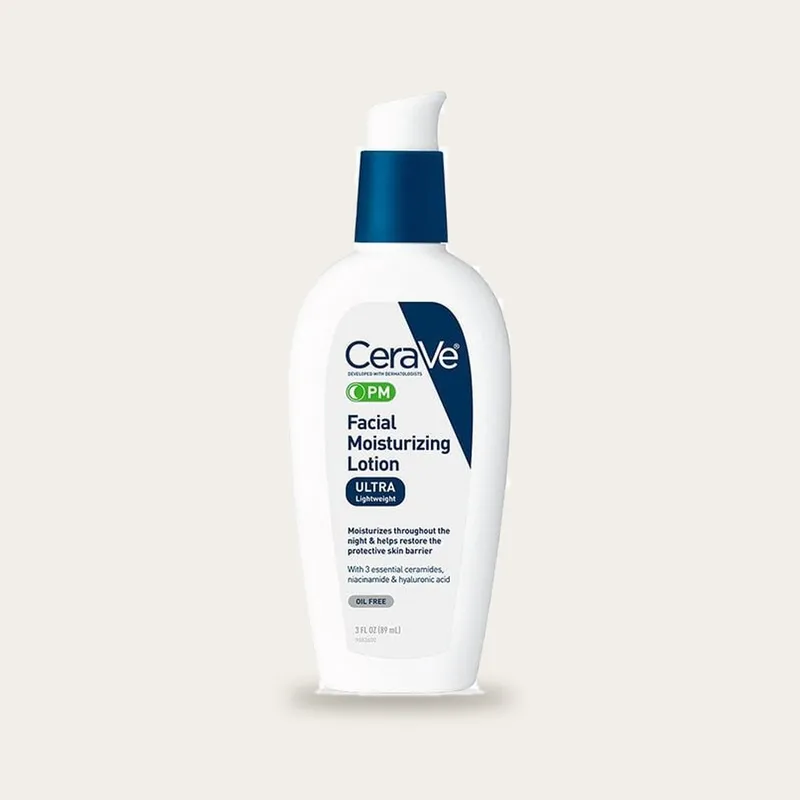
Photo: CeraVe · Pictured: 3 fl oz
CeraVe PM Facial Moisturizing Lotion
Linked size: 3 fl oz
Check price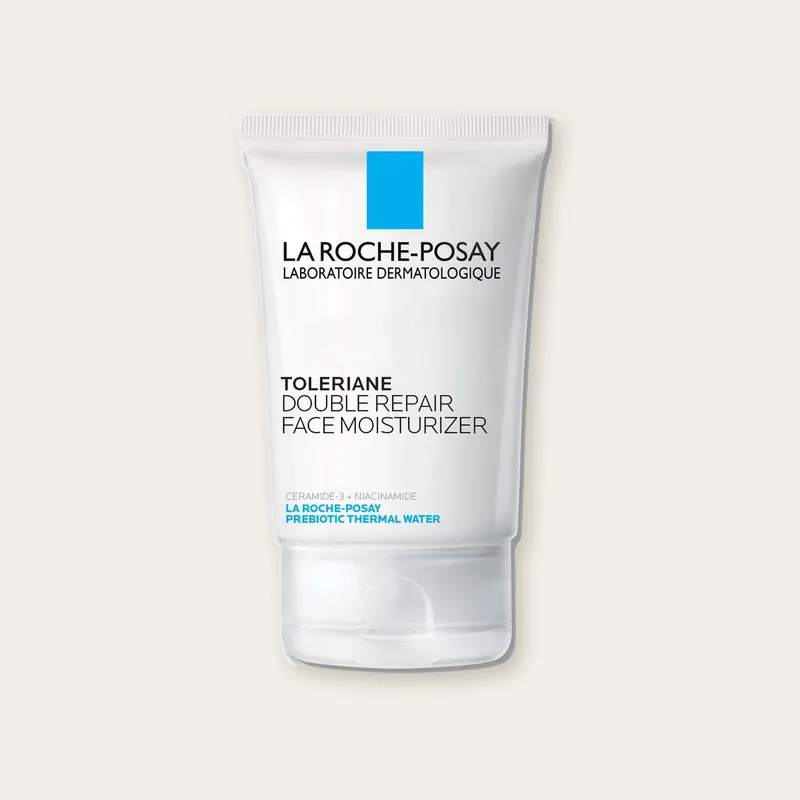
Photo: La Roche-Posay · Pictured: 100 ml (3.38 fl oz)
La Roche-Posay Toleriane Double Repair Face Moisturizer
Linked size: Non-SPF face moisturizer; confirm the selected size on the store page
Non-SPF version; the SPF 30 UV and Matte versions are different products.
Check priceProduct buttons and linked photos are affiliate links. Stock, sellers and packaging can change. Each card names the linked size.